
Archive
- April 2026 1
- November 2025 1
- January 2025 1
- December 2024 1
- October 2024 1
- May 2024 1
- April 2024 1
- February 2024 2
- December 2023 1
- November 2023 1
- October 2023 1
- September 2023 1
- August 2023 1
- July 2023 1
- June 2023 1
- May 2023 1
- March 2023 1
- February 2023 2
- January 2023 2
- October 2022 1
- August 2022 4
- May 2022 1
- March 2022 1
- February 2022 2
- December 2021 1
- November 2021 1
- September 2021 1
- August 2021 1
- July 2021 1
- June 2021 1
- May 2021 2
- April 2021 2
- March 2021 1
- February 2021 3
- January 2021 2
- November 2020 2
- September 2020 1
- July 2020 1
- June 2020 1
- May 2020 2
- February 2020 1
- December 2019 1
- October 2019 2
- April 2017 1
- March 2017 1
- February 2017 1
- January 2017 1
- December 2016 1
- November 2016 2
- October 2016 2
- September 2016 1
- May 2016 1
- March 2016 1
- February 2016 1
- January 2016 2
- December 2015 1
- November 2015 1
- October 2015 2
- September 2015 1
- March 2015 1
- February 2015 1
- January 2015 1
- October 2014 1
- September 2014 1
- July 2014 1
- June 2014 1
- July 2013 1
- April 2013 1
- March 2013 1
- January 2013 1
- November 2012 1
Simple Steps to Low-Carb Eating
Pizza. Pasta. Bread. Once upon a time, I couldn’t get enough of them. I began each day with a bowl of cereal. Started almost every dinner with a roll. Celebrated Fridays with a large cheese pie – and some cheesy bread. These days I steer clear of refined carbohydrates, but I still feel a client’s pain when she says, “Seriously? You want me to give up my bagels?!”
Before we get into the idea of “giving up” foods, my first question usually is, how did it become “your” bagel? Or “your” toast,” or “your” muffin? After highlighting her too-close-for-comfort relationship with said food, we start to explore the nature of refined carbs and their effects on diet, metabolism and overall health.
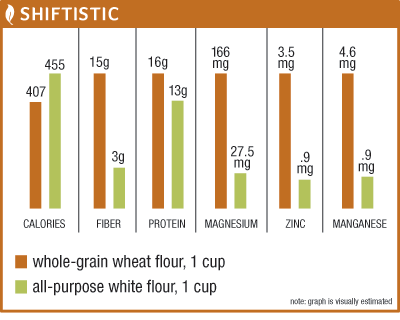
Pizza, pasta and bread are comfort foods that few of us are reluctant to give up. Most are made with refined wheat flour and pack a glycemic punch that sends blood sugar soaring and encourages insulin resistance, fat storage and chronic health problems like diabetes and heart disease – the nation’s leading cause of death. Refining strips whole grains of vitamins, minerals and fiber. Products labeled “enriched” have only some of those nutrients replaced. White flours have been bleached. So unbleached doesn’t mean “whole.”
A new study confirms what many healthy-living experts have been advocating for years now: a diet low in carbohydrates – even with some added fat – lowers weight and leads to better heart health than a diet that’s low in fat. The message is not to start ladling lard into your dishes, but to consider that fat is not the dietary demon it was once made out to be. So eat fewer carbs, slightly more good-for-you fats, throw in some exercise (of course you would), and you’ve got a healthier body all around.
Note that low-carb doesn’t mean no-carb. Just as your body needs fat and protein, it needs carbohydrates to thrive. But consider the source of your carbs: your body benefits from whole grains (plus fruits and veggies, beans and nuts) much more than it does from refined-flour pizza, pasta and bread. And note that this isn’t a low-carb diet. It’s not a quick fix, but a conscious way of eating for life.
In time, my client becomes versed in the effects of refined carbs on her body. Then we move on to that notion of “giving up” foods, focusing not on what she “can’t” eat, but all the good stuff she can eat, like whole, unprocessed foods, lean fish and meat.
Before we’re done – and this is very important – my client and I explore what might bring her comfort that has nothing to do with food. Calling a friend. Taking a walk. Working it out with yoga or Zumba. Writing about it. Meditation or prayer. These satisfy hungers that no food can. And while comfort foods may bring brief relief, they have nothing to do with lasting healing.
Eventually my client moves pizza/pasta/bread from main event to sideshow, and then to an occasional appearance if at all. And all that talk about giving up foods that weren't "hers" in the first place? Gone.
Chart from wholeshift.com
